Key Takeaways
- AI clinical decision support tools reduce the time spent on manual medical documentation and patient intake.
- Automated clinical summaries help doctors move from raw data to informed clinical decisions faster.
- Advanced differential diagnosis modules provide probability percentages based on comprehensive patient data.
- Medication safety is enhanced through verified databases like FDA and EMA with specific drug warnings.
In the fast-paced world of modern healthcare, clinicians are often overwhelmed by the sheer volume of patient data they must process. AI clinical decision support tools have emerged as a vital solution to this administrative burden. By automating the collection and synthesis of patient information, these tools allow doctors to focus more on the patient and less on the screen.
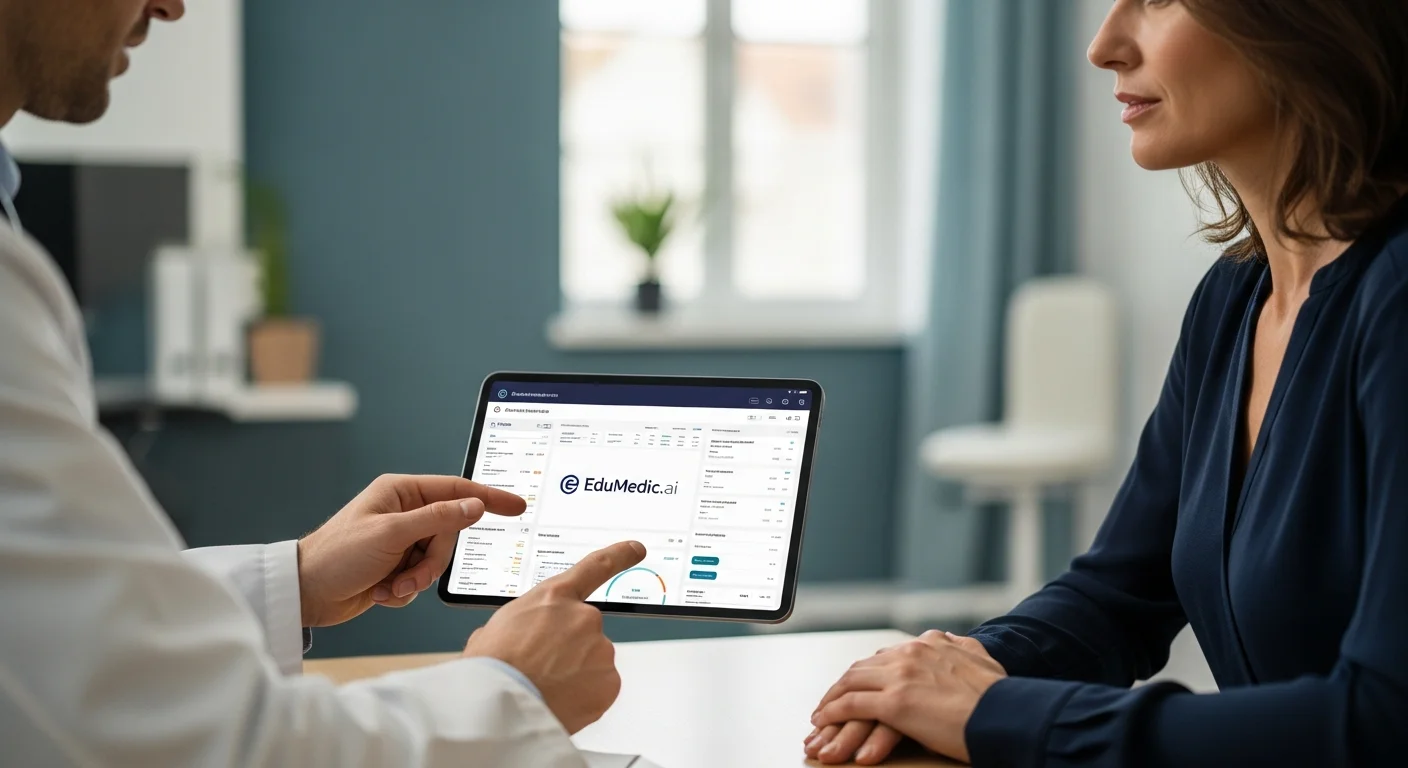
EduMedic.ai is at the forefront of this transformation, providing a platform that collects essential patient information before they even step into the clinic. This proactive approach ensures that the medical professional is armed with a ready-to-act clinical summary, rather than a pile of raw, unorganized notes.
The Evolution of AI Clinical Decision Support Tools

EduMedic.ai
Buy NowShifting from Raw Data to Actionable Insights
Historically, doctors had to manually sift through patient histories, lab results, and previous medications. Today, advanced algorithms can interpret this data instantly. According to the National Center for Biotechnology Information research on AI in healthcare, these tools significantly reduce the cognitive load on healthcare providers.
The Role of AI in Reducing Documentation Fatigue
Documentation fatigue is a leading cause of physician burnout. By using a clinical summary generator for doctors, the time spent on electronic health records (EHR) is slashed. This allows for a more personalized patient-doctor interaction, which is critical for positive health outcomes.
Ready to transform your clinical workflow?
Get Started with EduMedic.ai →How to Improve Patient Consultation Speed with Pre-Visit Data
Automating the Patient Intake Process
One of the most effective ways to save time is to ensure patients are better prepared. When users ask how to improve patient consultation speed, the answer often lies in digital intake. Collecting symptoms and medical history via a structured interface before the appointment ensures no detail is missed.
Converting Patient Narratives into Clinical Summaries
Patients often describe their conditions in subjective, narrative terms. AI translates these descriptions into professional clinical language. This creates a bridge between the patient's experience and the doctor's specialized knowledge, streamlining the diagnostic process.
AI Differential Diagnosis vs Manual Methods
Understanding Probability-Based Diagnosis
When comparing AI differential diagnosis vs manual methods, the use of statistical probabilities is a game-changer. EduMedic provides a list of potential diagnoses, each accompanied by a percentage probability based on existing medical literature and patient data points.
Enhancing Clinical Reasoning with AI Data
AI does not replace the doctor; it augments their expertise. By presenting rare but possible conditions that a human might overlook, the software acts as a secondary verification layer. According to the World Health Organization report on AI in health, this augmentation is key to modern clinical safety.
Increase your diagnostic accuracy today.
Explore EduMedic Features →Leveraging a Verified Drug Database for Clinicians
Integrating FDA and EMA Safety Standards
Effective treatment requires reliable data. EduMedic integrates a verified drug database for clinicians, sourcing information directly from the FDA drug database and the EMA European medicines agency. This ensures that every medication prescribed is backed by current regulatory standards.
The Importance of Drug-Specific Warnings
Generic warnings are often ignored due to 'alert fatigue.' However, medical software for specific drug warnings provides context-aware alerts. This means clinicians only see the warnings relevant to the specific patient's profile and medication interactions.
Benefits of AI in Medical Diagnosis and Prognostic Timelines
Visualizing Patient Outcomes with Stop Rules
One unique feature of EduMedic is the AI medical prognostic timeline. It visualizes the expected recovery path and includes clear "stop rules"—specific conditions under which a treatment should be discontinued or modified for patient safety.
Predicting Clinical Paths with AI Logic
By analyzing thousands of similar cases, AI can predict the likely clinical path of a patient. This foresight allows for proactive adjustments to treatment plans, leading to a higher standard of care and benefits of AI in medical diagnosis that were previously impossible.
Medication Safety Software: Protecting Patients with Precision
| Traditional Consultation | EduMedic AI-Enhanced |
|---|---|
| Manual data collection during visit | Automated pre-visit data collection |
| Reliance on memory for drug interactions | Verified database (FDA, EMA) verification |
| Static diagnosis based on intake notes | Dynamic differential diagnosis with probabilities |
Beyond Generic Alerts: Specific Drug Warnings
The best medication safety software doesn't just alert you to an interaction; it explains the severity based on the patient's specific physiology. This granularity is essential for complex patients on multiple medications.
Real-Time Drug Interaction Monitoring
Continuous monitoring of drug interactions as a prescription is being drafted prevents medical errors before they occur. This real-time validation is one of the key clinical decision support system advantages in a modern practice.
Ready to enhance patient safety and speed up your workflow?
Join EduMedic Today →
Frequently Asked Questions
How do AI clinical decision support tools save time?
They automate the collection of patient data and synthesize it into clinical summaries before the doctor meets the patient. This eliminates the need for manual transcription and helps the doctor focus immediately on the medical problem.
Is the drug database information verified?
Yes, EduMedic uses data from highly authoritative sources including Basemed, the FDA, and the European Medicines Agency (EMA). This ensures that all medication tables and safety warnings are accurate and current.
How does the differential diagnosis feature work?
The system analyzes the patient's symptoms and history against a vast database of medical knowledge. It then generates a list of potential diagnoses ranked by the probability of occurrence, helping clinicians consider all possibilities.
What makes EduMedic warnings different from generic alerts?
EduMedic provides warnings that are specific to the medication and the patient's unique health profile. This avoids the clutter of non-essential alerts, focusing the clinician's attention on real safety concerns.
How does the prognostic timeline help in treatment?
The timeline provides a visual roadmap of the patient's expected recovery. It includes clear rules for when to stop or adjust a medication, ensuring that treatment is dynamic and responsive to patient progress.
Conclusion
Adopting AI clinical decision support tools is no longer just an option for forward-thinking clinics; it is a necessity for maintaining high standards of care in an increasingly complex medical environment. Tools like EduMedic.ai provide the bridge between overwhelming raw data and the precision needed for effective clinical action.
By integrating clinical summaries, probability-based differential diagnosis, and verified medication safety protocols, healthcare providers can reclaim their time and focus on what truly matters: the health and well-being of their patients. As AI continues to evolve, its role in safeguarding patients and supporting clinicians will only grow more significant.
About the Author

Written by Aurelian Jibleanu, AI Software Engineer
Aurelian Jibleanu is an AI Software Engineer with 5+ years in AI medical applications and smart medical devices & 11+ years of experience building intelligent applications. Specializing in machine learning and medical data science, he's passionate about making AI accessible and practical for everyone. www.dollarappdev.com www.url2ad.com www.edumedic.ai https://apps.shopify.com/seo-auto-write-easy-blog