Key Takeaways
- AI clinical decision support systems significantly reduce the time spent on administrative data collection
- Automated clinical summaries allow doctors to focus on decision making rather than manual transcriptions
- Differential diagnosis tools with probability percentages help refine clinical accuracy and safety
- Verified medication data from sources like the FDA and EMA ensures higher prescription safety standards
The modern healthcare landscape is facing an unprecedented crisis of physician burnout, largely driven by the administrative burden of documentation. According to research published by PubMed, doctors spend nearly two hours on electronic health record tasks for every one hour of direct patient care. This imbalance not only affects doctor well-being but also impacts the quality of the patient-physician relationship.
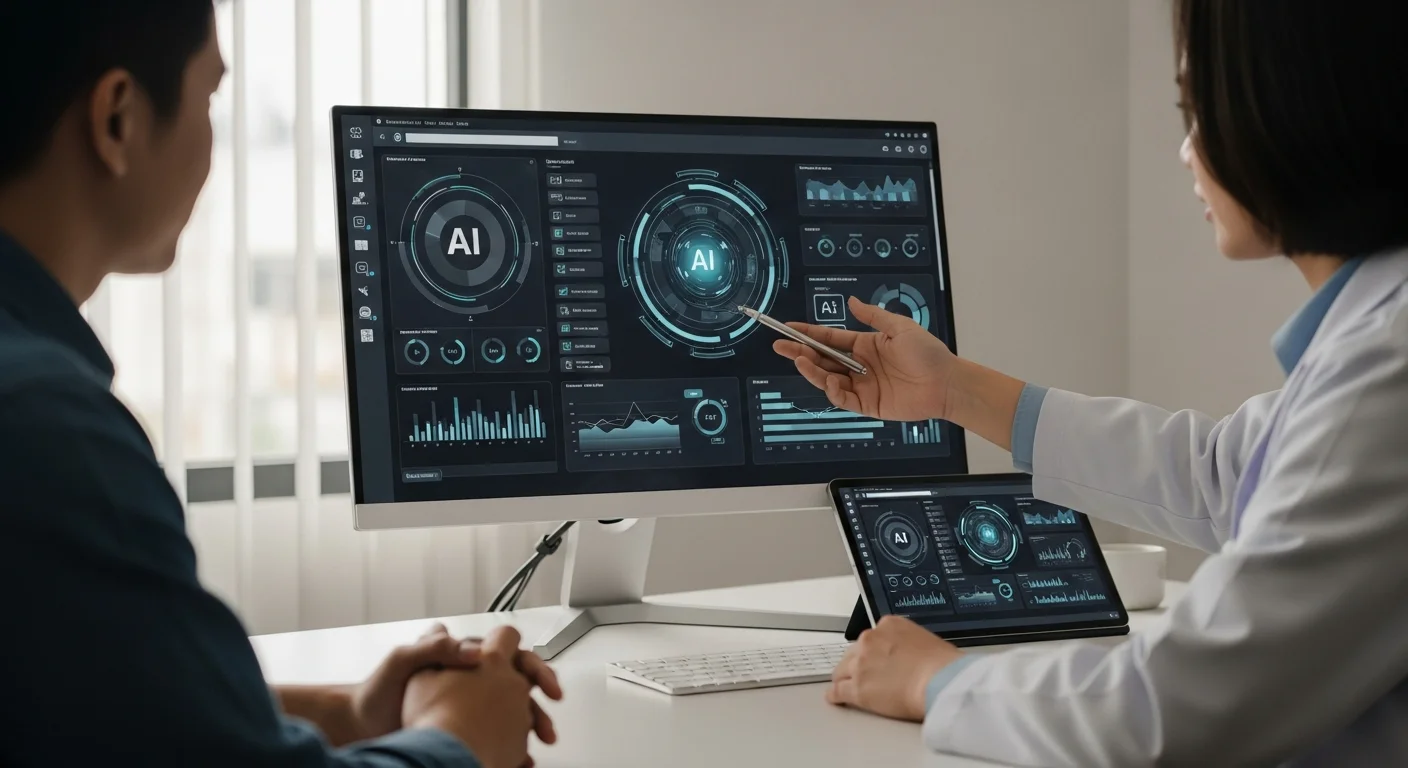
To address these challenges, the implementation of an AI clinical decision support system has become essential. By automating the collection of patient data before the visit and synthesizing it into actionable insights, technology like EduMedic.ai is reshaping how clinical decisions are made. This guide explores how AI is transforming medical practice from data collection to final diagnosis.
What is an AI Clinical Decision Support System?

EduMedic.ai
Buy NowDefining Modern Decision Support
An AI clinical decision support system is a software application that analyzes clinical data to provide physicians with evidence-based recommendations. According to the Office of the National Coordinator for Health Information Technology, these systems provide clinicians, staff, patients, or other individuals with knowledge and person-specific information to enhance health and health care.
Moving Beyond Basic Databases
Unlike traditional static databases, modern AI tools use machine learning to identify patterns in symptoms and histories. This allows for a dynamic assessment that evolves as new data is entered, ensuring that the physician always has the most relevant information at their fingertips during the consultation.
Ready to transform your practice with AI-driven summaries?
Try EduMedic.ai Today →Key Benefits of AI in Medical Practice
Reducing Diagnostic Errors
One of the primary benefits of AI in medical practice is the reduction of cognitive bias. According to Mayo Clinic Proceedings research, diagnostic errors are often the result of premature closure in thinking. AI tools provide a comprehensive list of alternatives that might otherwise be overlooked.
Improved Patient Engagement
When doctors spend less time typing, they spend more time listening. AI helps shift the focus back to the human element of medicine by handling the heavy lifting of data organization, leading to higher patient satisfaction scores and better therapeutic alliances.
How to Speed Up Patient Consultations
Pre-Visit Data Collection
The secret to how to speed up patient consultations lies in preparation. EduMedic collects essential information before the patient even walks into the office. This proactive approach ensures that the "history of present illness" is already structured and ready for review.
Eliminating Redundant Questions
With a clinical summary ready, physicians can skip basic intake questions and dive directly into clarifying details and clinical examinations. This can shave minutes off every appointment while actually increasing the depth of the clinical investigation.
| Feature | Traditional Consultation | EduMedic AI Workflow |
|---|---|---|
| Intake Method | Manual Verbal History | Automated Digital Collection |
| Data Entry | Manual Note-taking | AI-Generated Clinical Summary |
| Differential Diagnosis | Memory-Based | AI Probability-Based List |
Start optimizing your clinical workflow with automated diagnostic tools.
See EduMedic Features →Advanced AI Differential Diagnosis Tool Features
Probability-Based Analysis
An AI differential diagnosis tool does more than list possibilities; it assigns probabilities based on the specific combination of symptoms. This allows the doctor to prioritize testing for high-probability conditions while remaining aware of "can't miss" rare diagnoses.
Dynamic Diagnostic Trees
The system updates its suggestions in real-time. As the clinician adds physical exam findings, the differential list adjusts instantly, providing a guided path through the complex landscape of clinical reasoning.
Enhancing Safety with Medication Warning Software
Specific vs Generic Warnings
Generic alert fatigue is a real problem in healthcare. EduMedic’s medication warning software for doctors provides drug-specific warnings rather than broad category alerts, making the information highly relevant and actionable.
Verified Global Sources
Safety is paramount, which is why data is pulled from verified sources like the FDA and the European Medicines Agency (EMA). This ensures that the medication tables and prognostic timelines are based on the latest regulatory and clinical standards.
The Impact of a Clinical Summary Automation Tool
Streamlining Documentation
A clinical summary automation tool takes raw, unstructured patient input and converts it into a professional clinical note. This reduces the cognitive load on the physician and ensures that no critical details are lost during the transition from the patient's story to the clinical record.
Prognostic Timelines
EduMedic provides a clear timeline for patient progress, including specific rules for when to stop or adjust medication. According to the World Health Organization, medication safety is a global priority, and automated timelines provide an extra layer of defense against adverse drug events.
Ready to experience the future of AI-enhanced clinical workflows?
Get Started with EduMedic →
Frequently Asked Questions
Is an AI clinical decision support system accurate enough for practice?
Yes, when used as a supportive tool rather than a replacement for clinical judgment. AI systems like EduMedic provide probabilities based on verified medical literature, helping physicians confirm their findings and explore missed possibilities.
How does EduMedic speed up patient consultations?
By collecting all relevant patient history and symptoms before the visit, the system presents the doctor with a concise summary immediately. This eliminates the first 5-10 minutes of manual data gathering during the appointment.
Are the medication safety modules reliable?
The medication modules are extremely reliable as they pull data directly from authoritative databases like BaseMed, the FDA, and the EMA. They provide specific warnings tailored to the drug, reducing the noise of generic alerts.
Does this tool work for all medical specialties?
While particularly powerful for general practice and internal medicine where differential diagnoses are broad, the clinical summary and medication safety features provide benefits across most clinical specialties.
Is patient data secure when using AI medical tools?
EduMedic prioritizes data security and privacy, ensuring that patient information is handled according to strict healthcare regulations. Always check the specific privacy policy for your region to ensure compliance.
Conclusion
The integration of an AI clinical decision support system into daily medical practice is no longer a luxury but a necessity for efficiency and safety. Tools like EduMedic.ai bridge the gap between massive amounts of raw patient data and the critical decisions physicians must make every day.
By automating patient intake, generating actionable clinical summaries, and providing verified medication safety alerts, we can return to a model of healthcare where the focus is on the patient, not the paperwork. Embrace the future of medicine by incorporating AI tools that empower your clinical expertise.
About the Author

Written by Aurelian Jibleanu, AI Software Engineer
Aurelian Jibleanu is an AI Software Engineer with 5+ years in AI medical applications and smart medical devices & 11+ years of experience building intelligent applications. Specializing in machine learning and medical data science, he's passionate about making AI accessible and practical for everyone. www.dollarappdev.com www.url2ad.com www.edumedic.ai https://apps.shopify.com/seo-auto-write-easy-blog

