Key Takeaways
- AI clinical decision support tools reduce the administrative burden by automating patient history collection
- Automated clinical summaries allow physicians to focus on complex decision-making rather than data entry
- Integrated medication safety modules and verified databases decrease the risk of prescription errors
- Advanced algorithms provide differential diagnosis probabilities to support evidence-based clinical conclusions
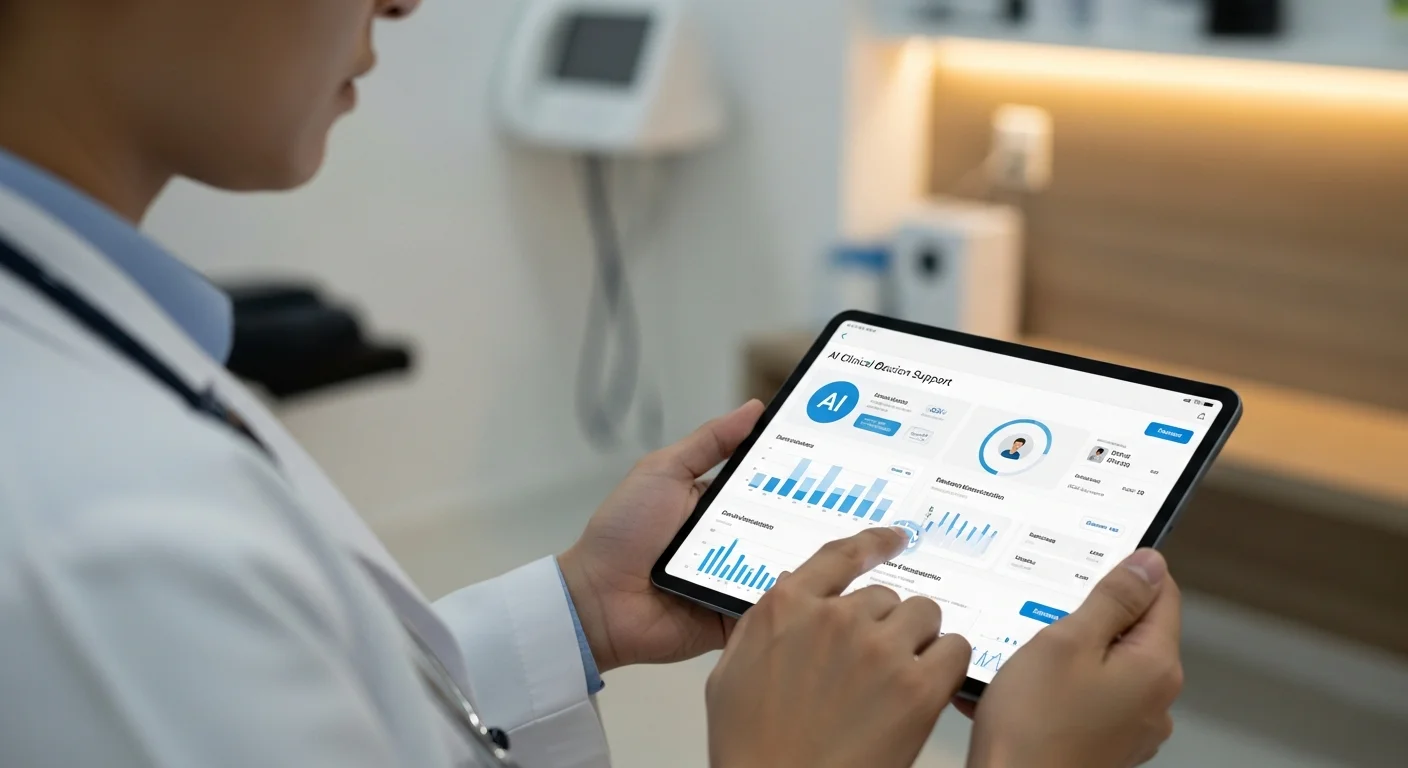
The modern healthcare landscape is characterized by an increasing volume of patient data and a decreasing amount of time available for each consultation. For many practitioners, the challenge lies in synthesizing raw patient information into a coherent plan within minutes. Using AI clinical decision support tools has emerged as a vital strategy for improving both efficiency and patient outcomes.
According to research published on PubMed Central, the integration of artificial intelligence into clinical workflows can significantly reduce diagnostic errors and optimize physician time. Platforms like EduMedic.ai are leading this transition by preparing patients before they even step into the office.
Ready to transform your clinical workflow?
Experience EduMedic.ai Now →The Benefits of AI in Medical Practice

EduMedic.ai
Buy NowReducing Administrative Burden
One of the primary benefits of AI in medical practice is the reduction of manual documentation. AI systems can organize patient-reported symptoms into structured formats, allowing doctors to spend more time on physical examinations and patient communication.
Data-Driven Decision Making
AI tools analyze vast datasets to identify patterns that might be missed by the human eye. According to the World Health Organization, ethical AI use can bridge the gap in healthcare access by providing high-level diagnostic support in various clinical settings.
How to Speed Up Medical Consultations
Automated Patient History Collection
Wondering how to speed up medical consultations without sacrificing quality? The answer lies in pre-visit data collection. EduMedic collects essential information before the visit, transforming raw data into an action-ready clinical summary.
Streamlining the Intake Process
When the patient arrives, the physician already has a concise history, current medication list, and primary complaints highlighted. This removes the first 5-10 minutes of repetitive questioning from every appointment.
AI for Differential Diagnosis and Probabilities
Calculating Diagnostic Probabilities
Advanced AI for differential diagnosis doesn't just list possibilities; it assigns probabilities based on clinical evidence and patient history. This helps clinicians prioritize testing and referrals more effectively.
Evidence-Based Clinical Logic
By utilizing AI medical diagnosis probability, the software acts as a second pair of eyes. It cross-references symptoms with global medical databases to ensure rare conditions are considered alongside common ones.
Enhance your diagnostic accuracy today.
Start Free Trial →Medication Safety Software and Verified Databases
Integration with FDA and EMA
Reliable medication safety software for doctors must rely on gold-standard data. EduMedic incorporates sources like the FDA and EMA to provide real-time drug tables and warnings.
Specific Drug Warnings
Unlike generic alerts that cause "alarm fatigue," specific drug warnings highlight precise interactions and contraindications tailored to the individual patient profile, ensuring a higher standard of care.
| Feature | Clinical Benefit |
|---|---|
| Clinical Summaries | Instant overview of patient history and symptoms |
| Differential Diagnosis | Probabilistic matching to reduce diagnostic errors |
| Verified Drug Tables | Accurate dosing and interaction info from FDA/EMA |
| Prognostic Timelines | Clear visualization of disease progression and stopping rules |
Prognostic Timelines and Clinical Decisions
Visualizing Patient Outcomes
A prognostic timeline in clinical medicine provides a roadmap for both the doctor and the patient. It outlines expected recovery milestones and defines clear "stopping rules" for medications that are no longer effective.
From Raw Data to Action
The ultimate goal of any clinical decision support system benefit is the transition from observation to action. By synthesizing data points into a visual timeline, physicians can make more confident long-term management decisions.
Join the future of medicine with EduMedic.
Get Started Today →
Frequently Asked Questions
What are AI clinical decision support tools?
These are software applications that use advanced algorithms to analyze patient data and provide health care professionals with evidence-based information to enhance medical decisions. They help in summarizing history, suggesting diagnoses, and checking medication safety.
How does EduMedic improve patient preparation?
EduMedic engages with the patient before the appointment to collect symptoms, history, and current medications. This ensures the doctor has a complete clinical summary ready at the start of the consultation, saving valuable time.
Is the drug information in EduMedic verified?
Yes, EduMedic uses verified data from authoritative sources including Basemed, the FDA, and the EMA. This ensures that all drug tables and safety warnings are based on the latest clinical guidelines and regulatory approvals.
Can AI replace a doctor's diagnosis?
No, AI is designed to support, not replace, clinical judgment. It provides probabilities and summaries to help the physician make more informed decisions faster, but the final clinical responsibility always remains with the doctor.
What is a prognostic timeline?
A prognostic timeline is a visual representation of the expected course of a patient's condition. It includes milestones for improvement and clear rules on when to stop or adjust treatment based on patient response.
The Future of Efficient Clinical Practice
The integration of AI clinical decision support tools is no longer a luxury but a necessity for the modern physician. By automating the heavy lifting of data collection and synthesis, tools like EduMedic.ai allow doctors to return to what they do best: providing compassionate, high-quality care to their patients.
As healthcare continues to evolve, the ability to quickly pivot from raw data to clinical action will define the most successful practices. Embracing technology that offers verified drug data, probabilistic differential diagnoses, and clear prognostic timelines is the first step toward a more efficient and safer medical future.
About the Author

Written by Aurelian Jibleanu, AI Software Engineer
Aurelian Jibleanu is an AI Software Engineer with 5+ years in AI medical applications and smart medical devices & 11+ years of experience building intelligent applications. Specializing in machine learning and medical data science, he's passionate about making AI accessible and practical for everyone. www.dollarappdev.com www.url2ad.com www.edumedic.ai https://apps.shopify.com/seo-auto-write-easy-blog